Custom software and data systems for work your staff still do by hand.

We work out what to build with the people who run the business, the staff who do the work and your technical lead if you have one. Then we build the data pipelines, the back end and the application your staff use.

  • $3,000Build Plan audit
  • Fixed pricebuild, priced after the audit
  • 6–10 weekstypical build

Hand-built reportsHundreds of staff hours a month replaced by dashboardsOne client's estimate; several staff built the reports

Purchase orders30 minutes to 10 minutesA wholesaler, about 200 a week

Loan intake2–4 hours to 10–15 minutesSeveral US lenders, as a subcontractor; per loan, review included

Screens behind the cards: working examples on invented dataFigures on the cards: real past client results

Results from past work

Manual document work

  • Purchase order entry: about 30 minutes down to about 10 minutes, on about 200 orders a week (a wholesaler; the system ran for over a year)
  • Loan processing: 2 to 4 hours per loan down to 10 to 15 minutes, review included (several small and mid-sized US mortgage lenders, as a subcontractor)
  • Document processing: about 75% less time, by the client's estimate (a PDF-to-invoice system)

Slow analysis

  • Curve generation: about 4 hours down to under 1 hour (Argus Media, our founder's past employer)
  • Data pipeline run: 3 hours down to 45 minutes (Wealth Access, our founder's past employer)
  • Data quality issues: 90% fewer, counted before and after (Wealth Access, our founder's past employer)

Manual reporting

  • Reporting: hundreds of staff hours a month of hand-built reports replaced, by the client's estimate (one client's dashboards; several staff had built the reports by hand)

Data products

  • Data product contract at our founder's past employer: $2M+ (signed by a client of General Index, a commodity pricing startup, for the data his team built)
  • Manual work: 90% automated across 300+ commodities, counted before and after (General Index, our founder's past employer)

Client work is described by type and size, not by name, because much of it was done as a subcontractor. References are available on request.

Live software, not a demo: RNG RFP, a marketplace for renewable-gas project proposals that our founder built and runs 

How we check that a system works

We test each system against work your staff have already finished. At the wholesaler, staff check each finished sheet. Here is a fuller example, from the loan work above.

68% to 99%
Loans right, first version to third, on about 300 held-out loans

Several small and mid-sized US mortgage lenders run loan intake on one system our founder built, working as a subcontractor. Before it, staff collected the documents by hand, typed the values into Encompass or their own systems, did the math and ran every rule check themselves.

Now the system reads each package of 300 to 800 pages, files the pages, writes 84+ fields directly into Encompass, along with each lender's own custom fields, and runs the rule checks. A value is written only when the documents agree, and a person reviews and approves every packet. The raw documents, the first extraction, every change a person makes, and each approval and submission are recorded.

Each version was scored against about 300 loans the lenders' staff had already processed, kept separate from the loans used to build it. A loan counted only when its fields matched and its rule errors were flagged correctly. The first version got 68% of loans right. Most of the misses were rules staff followed that nobody had written down. The third version got 99%. The project wrapped up in July 2026 and the system is still in use.
Working examples you can use

Client-inspired, fully working applications on invented data. Open one, pick a person and use it. None is a client result.

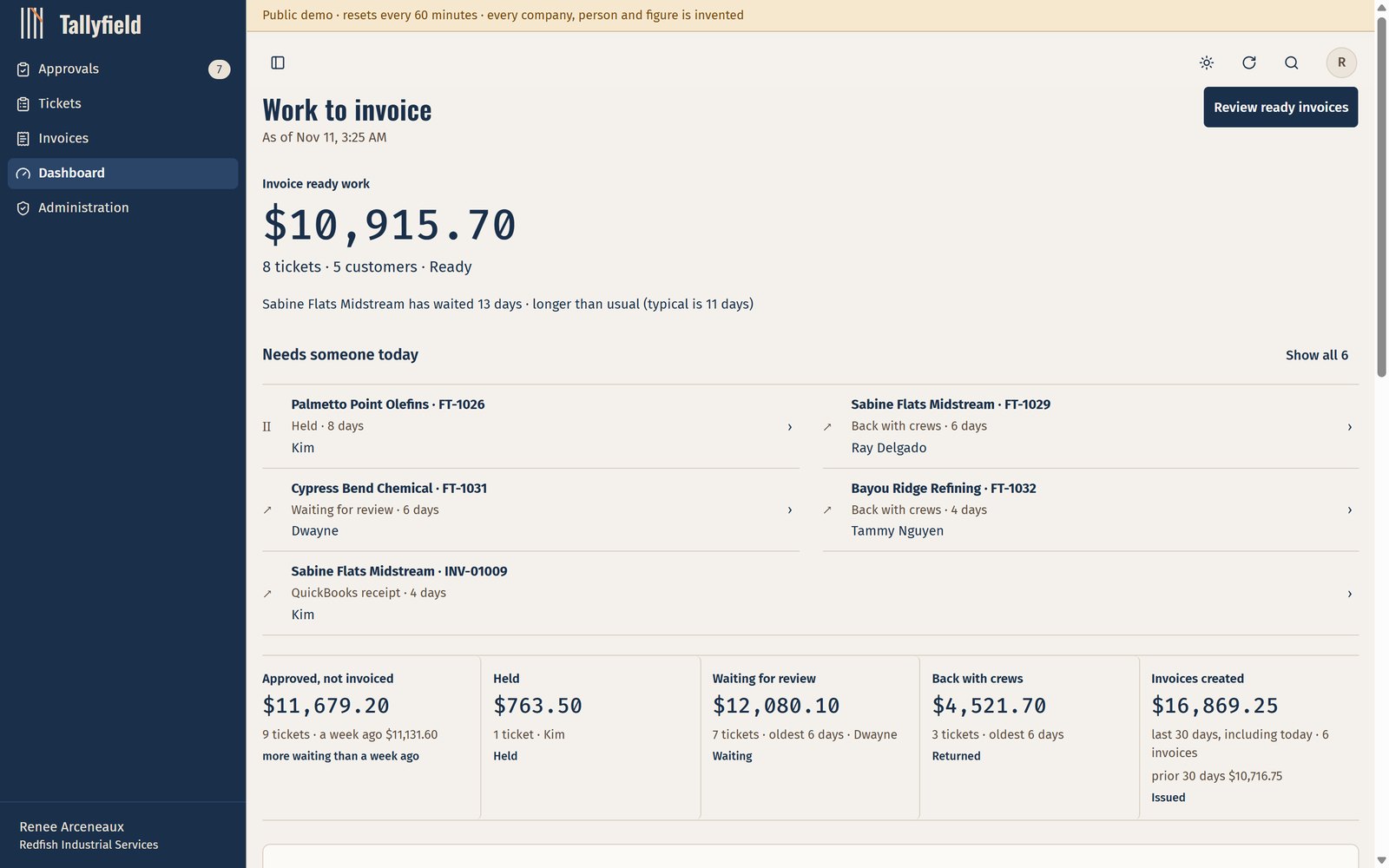
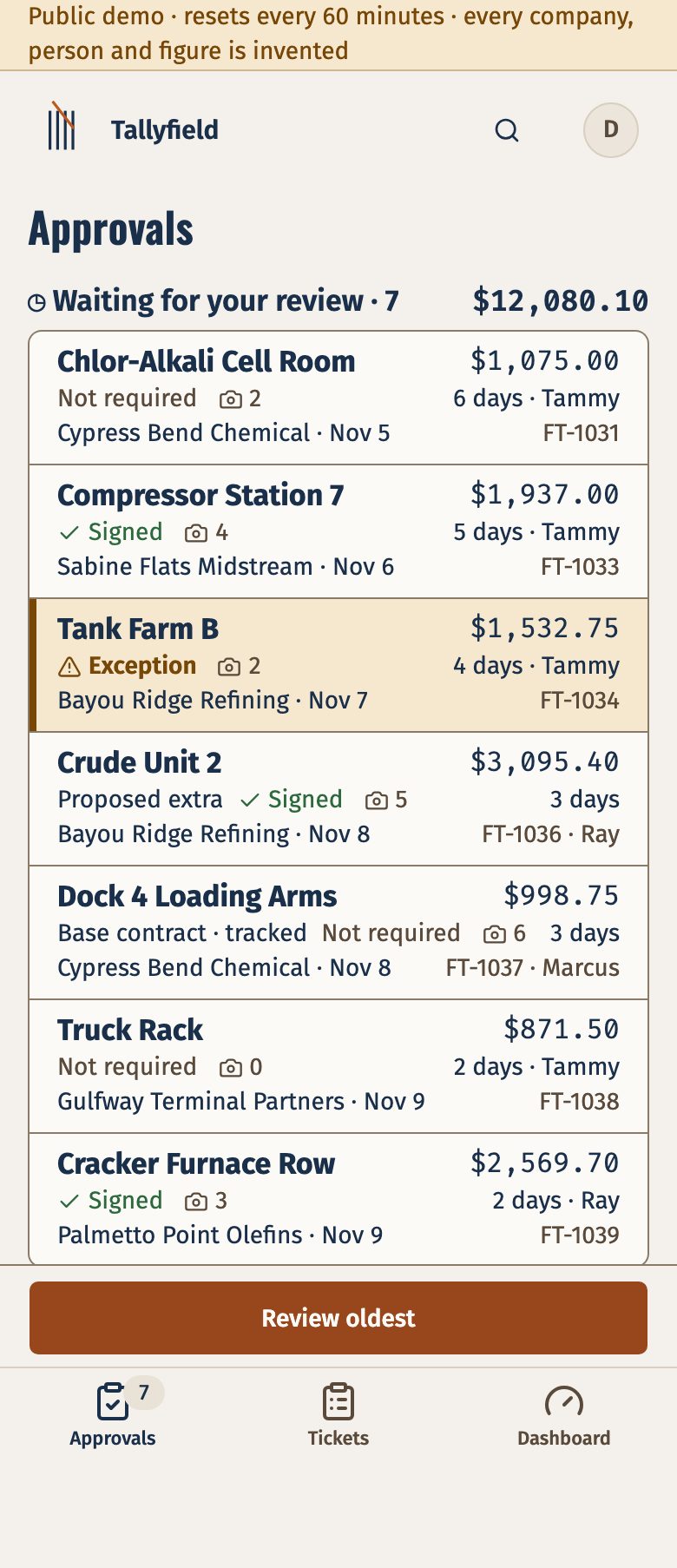
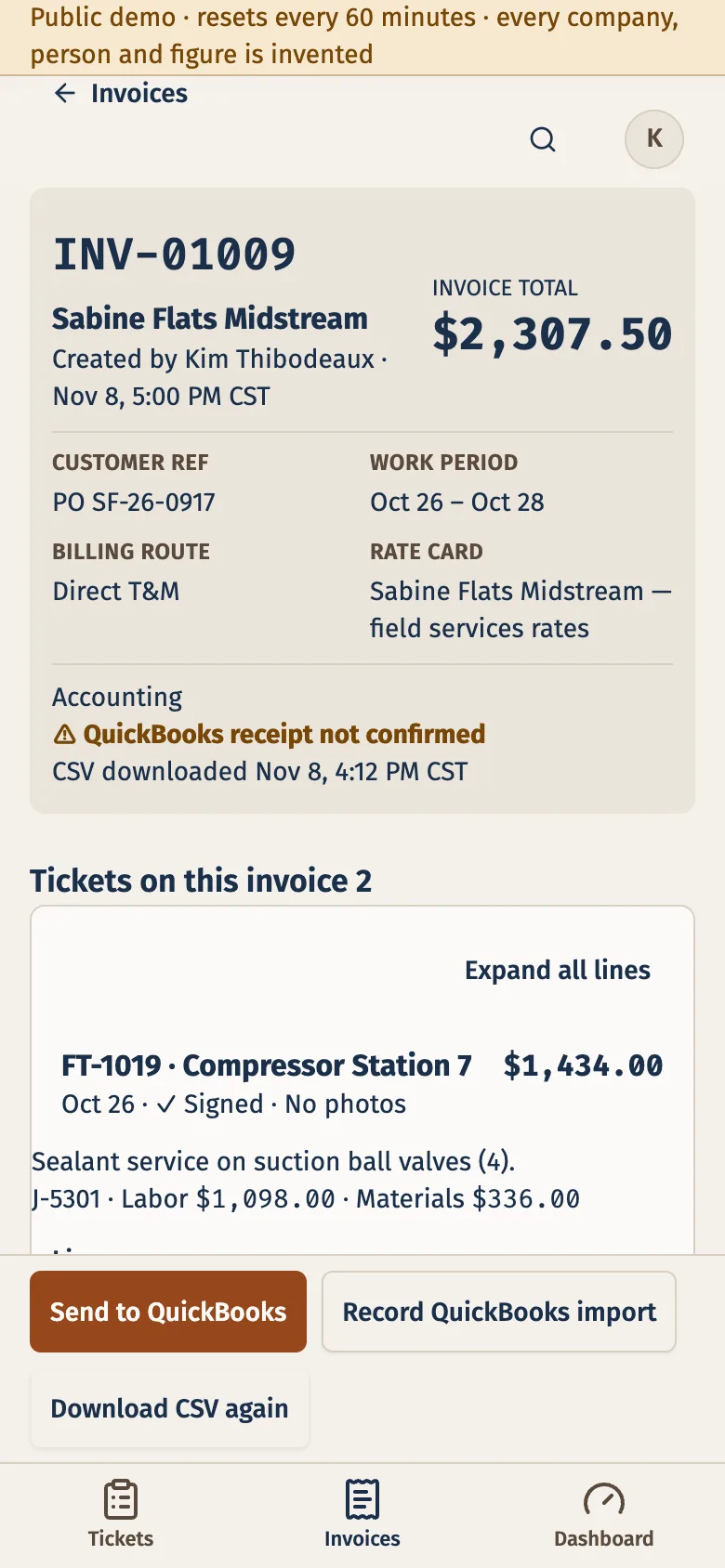
Tallyfield's owner dashboard: $10,915.70 of work ready to invoice, and who needs to act todayTallyfield on a phone: the supervisor's approvals, oldest first, with the dollars waiting

Field service billing

Tallyfield

Signed job tickets become invoices without paper or retyping.

For field service companies that bill from job tickets. Paper tickets reach the office days late, and every day a ticket waits is a day the invoice isn't sent.

Sign in as Ray, the foreman, Dwayne, the supervisor, Kim in billing, or Renee, the owner.

Try the demo

Ray records a job on site and sends it; Dwayne approves it

  • Field tickets
  • Customer sign-off
  • Approval workflow
  • QuickBooks invoicing (Intuit sandbox)
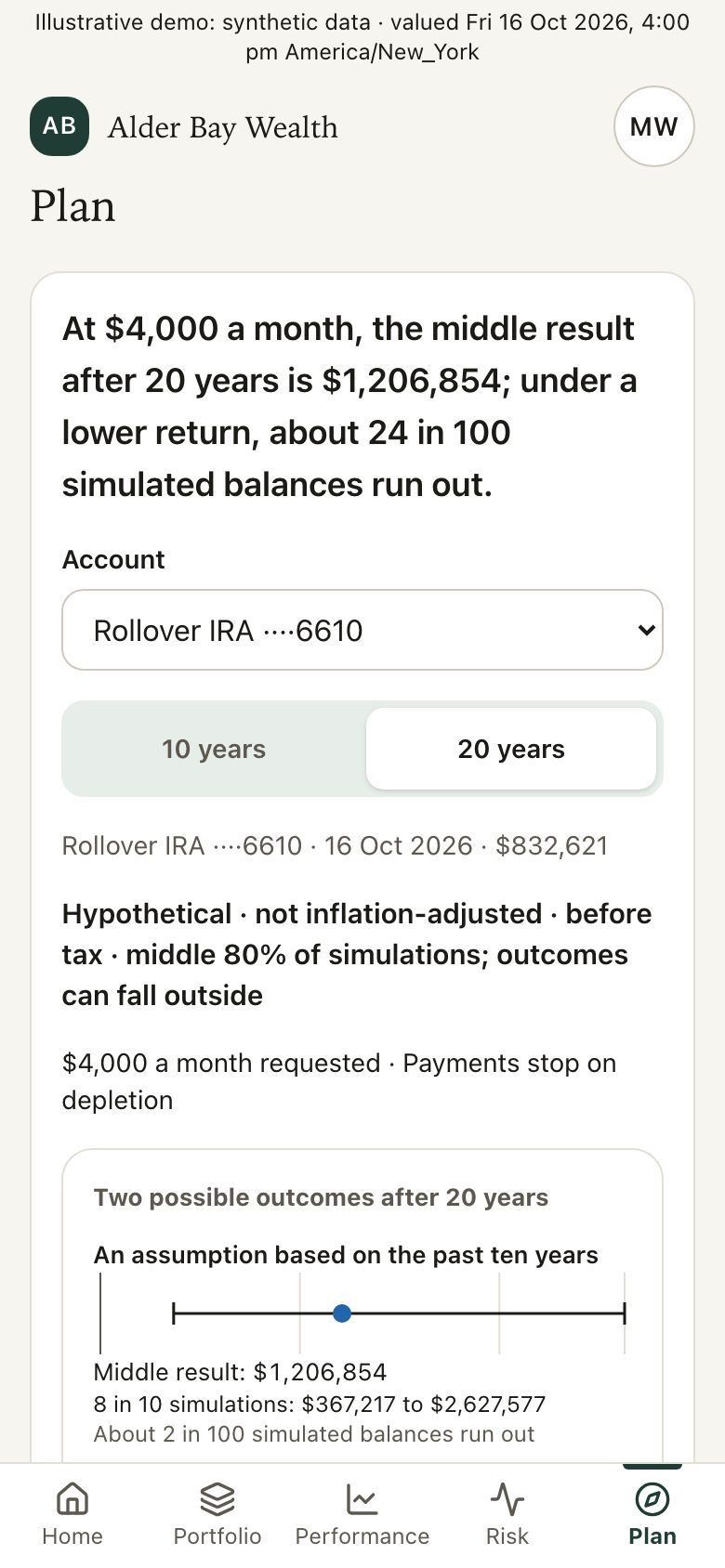
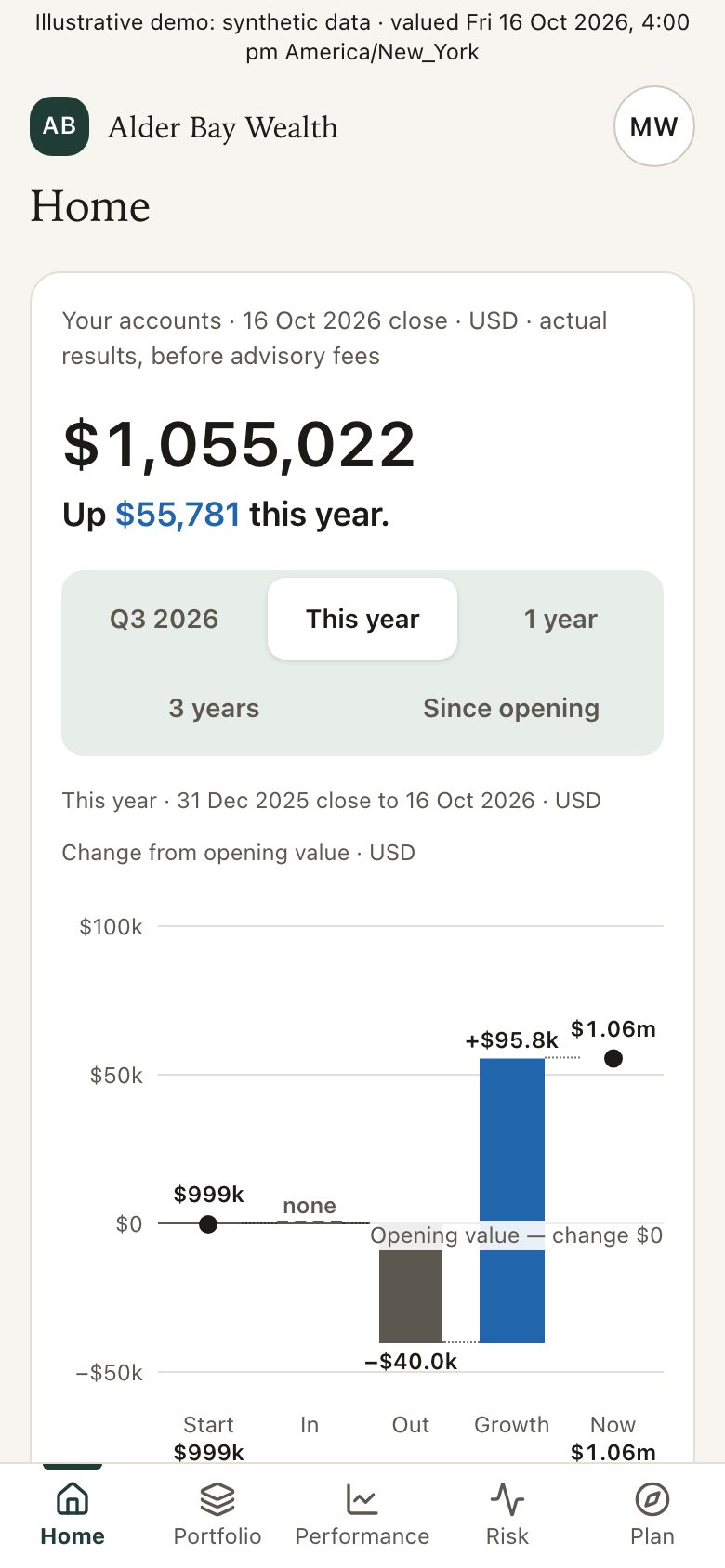
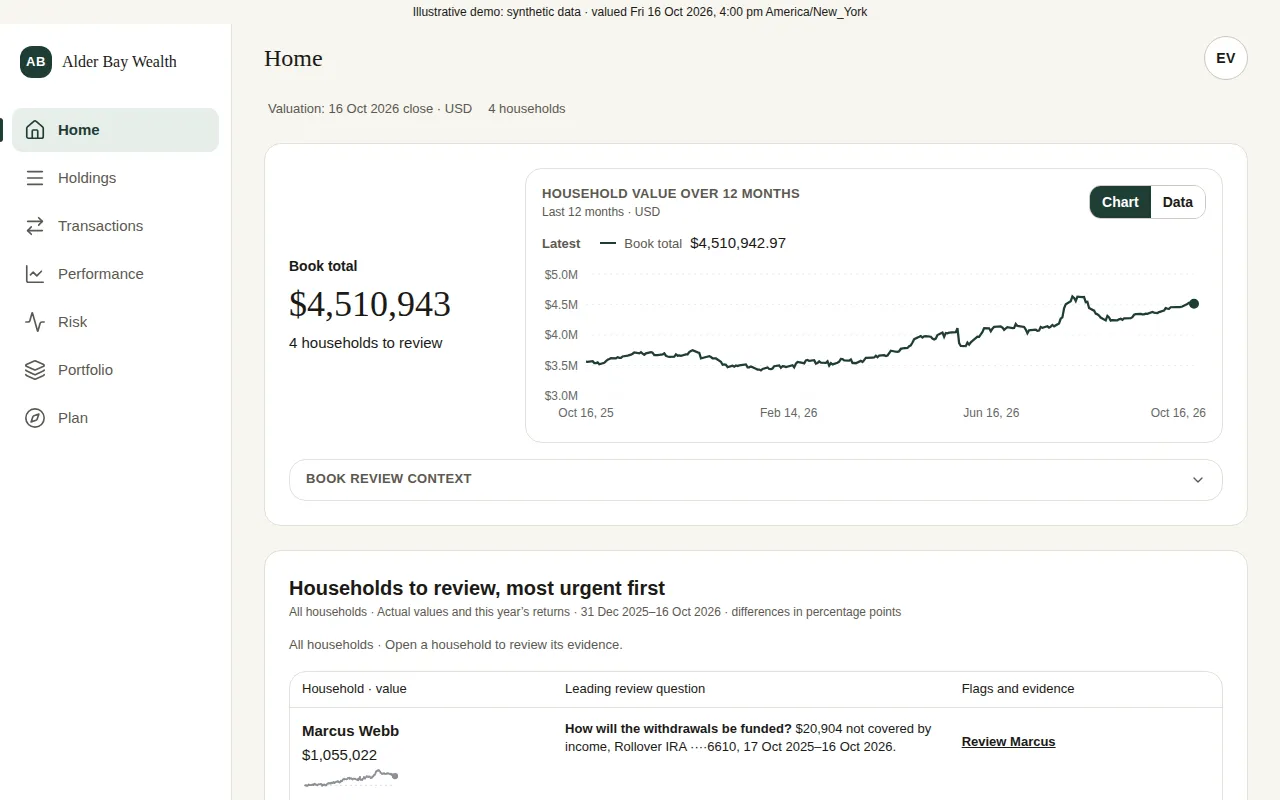
Elena's Home on a laptop: the whole book's value and the households to review, most urgent firstStillwater on a phone: will $4,000 a month last 20 yearsStillwater on a phone: a client's home, $1,055,022, and where the money went this year

Wealth analytics

Stillwater

Advisors see which household needs a call today, and why.

For advisory firms and their clients. Performance, risk and retirement numbers live in separate reports, so the household that needs a call is easy to miss.

Sign in as Elena, the advisor, or Marcus or Dana, her clients.

Try the demo

Elena's morning: who needs her, and why (then Marcus sees it)

  • Prioritized alerts
  • Portfolio analytics
  • Client access
  • Retirement modeling
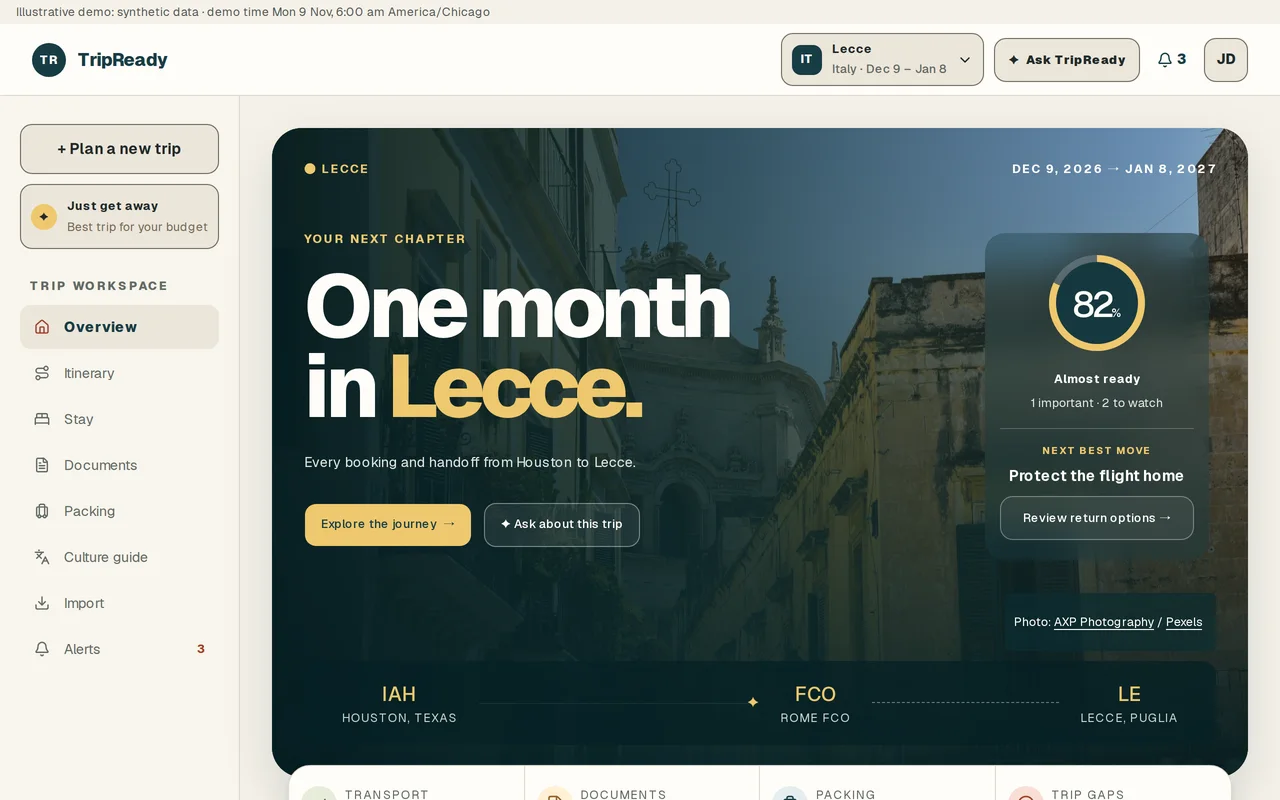
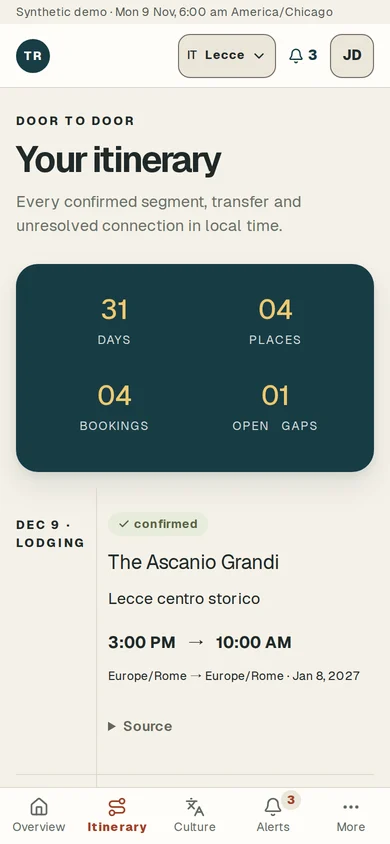
TripReady's trip overview on a laptop: One month in Lecce, 82% ready with one open gap, and the route from Houston to LecceThe itinerary on a phone: days, places, bookings and open gaps

Travel planning

TripReady

It joins flights, trains and hotels booked separately into one door-to-door plan and flags the gaps.

For travelers and the people who plan trips for them. Every booking is confirmed, yet checkout in Lecce is at 10:00 and the flight leaves Rome at 10:20. Booked separately, a missed connection usually means no free rebooking.

Sign in as Jordan, the traveler.

Try the demo

The flight home leaves from Rome. Nothing gets the traveler there.

  • Conflict detection
  • Real flight, hotel and train options (recorded Google results)
  • Entry requirements
  • AI assistant that answers from the trip's own bookings
  • Door-to-door itinerary
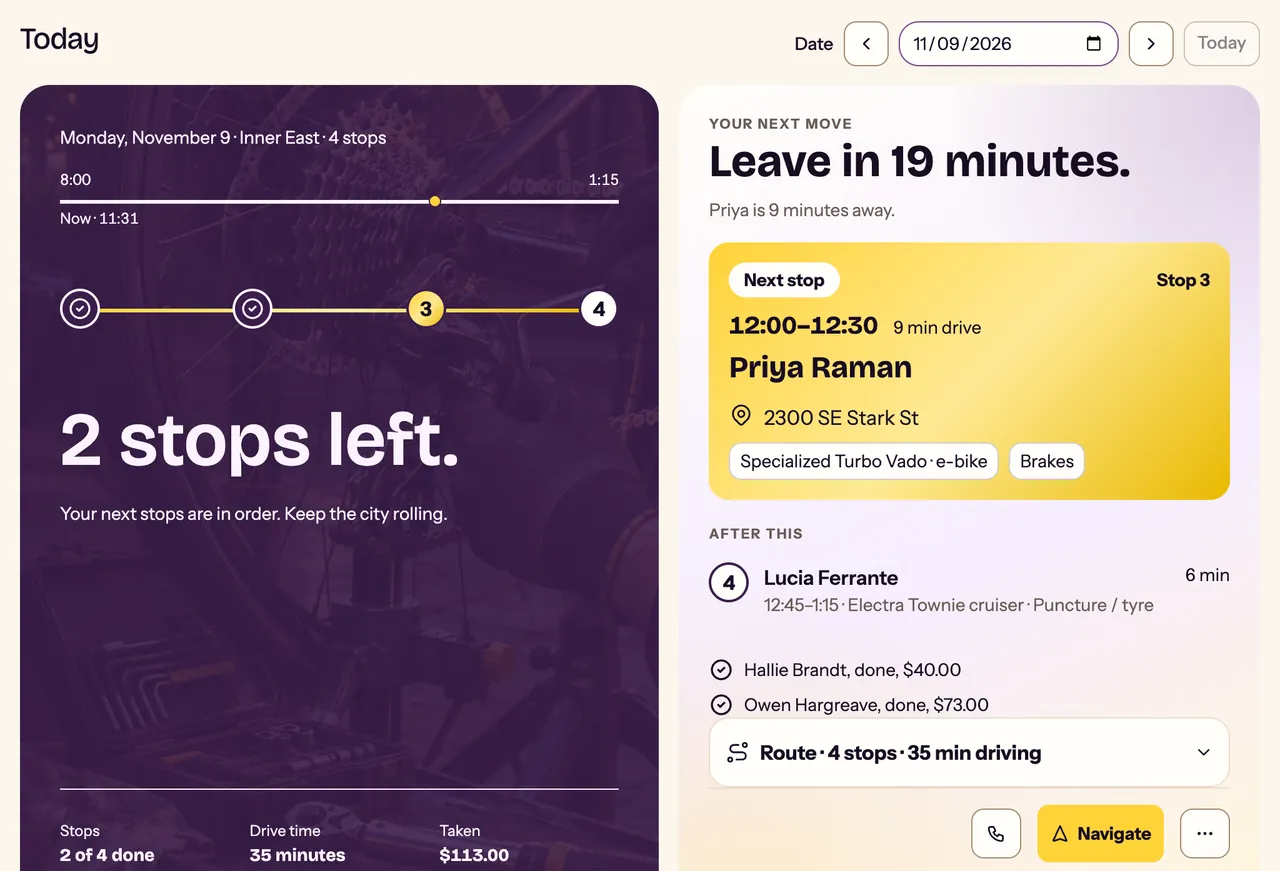
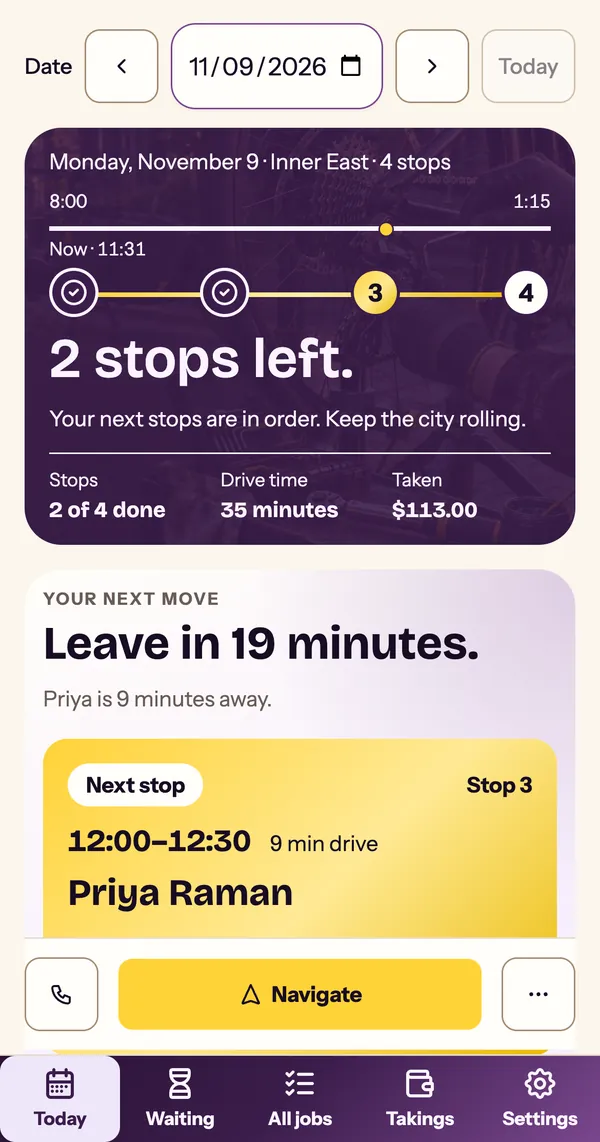
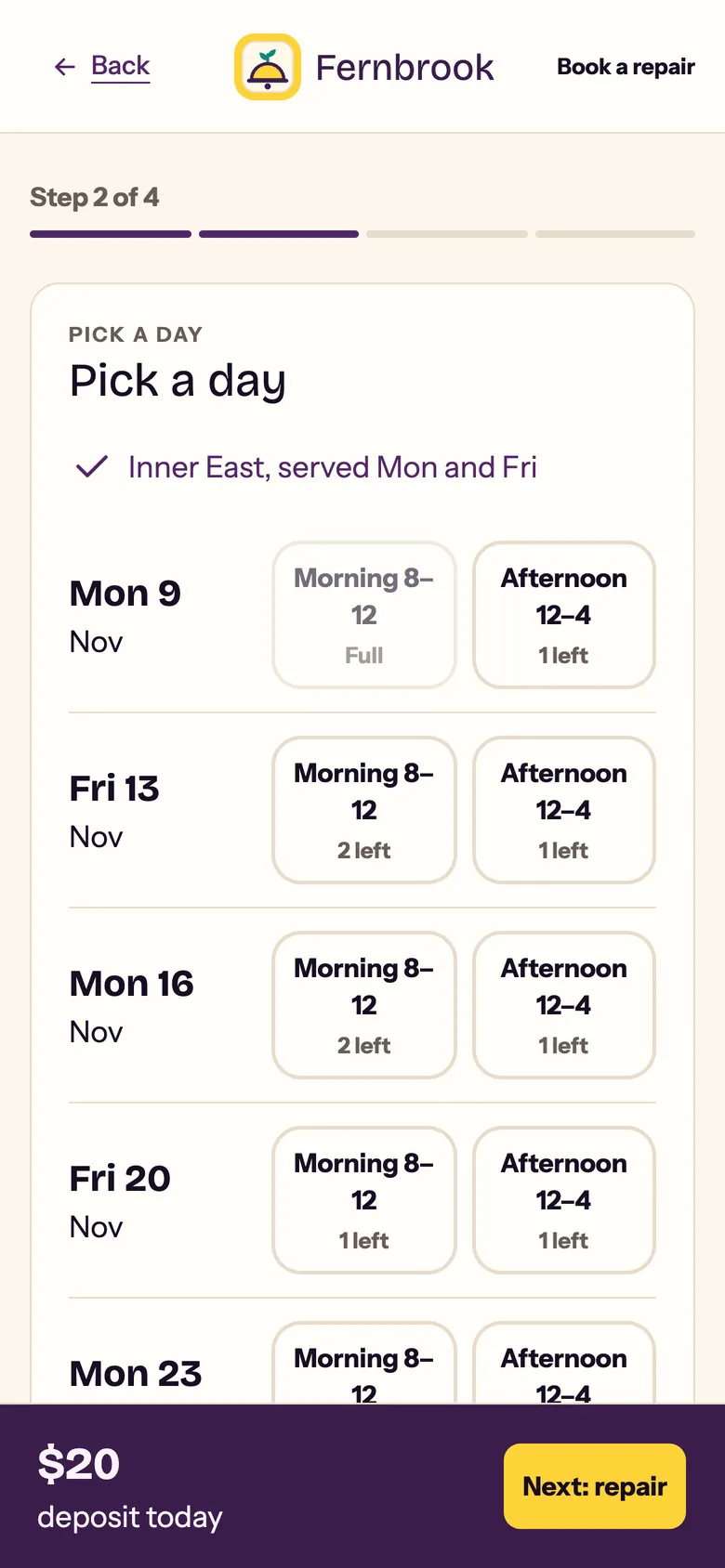
Rowan's Today on a laptop: the round so far, the next stop and when to leaveFernbrook on a phone: the mechanic's day, two stops left and when to leave for the nextThe customer's phone, picking a day for the repair

Booking and dispatch

Fernbrook

Customers book and pay a deposit online, and the mechanic's day is routed in drive order.

For trades that go to the customer. Bookings happen by phone tag, a no-show costs a paid slot, and tomorrow's route is planned on paper in the evening.

Book a repair as a customer, or sign in as Rowan, the mechanic.

Try the demo

A customer books a repair and pays the deposit

  • Online booking
  • Card deposits (Stripe test mode)
  • Route planning
  • Revenue by week

Where to start

The Build Plan audit

A fixed price for your build, in writing, in 1 to 2 weeks. Start with a free 30-minute call. If an audit is worth it for you, we work out how your business runs and what to build first, before any development is priced.

  • How your business runs today: the people, the steps and the systems
  • Where the time goes, and what to build first
  • Requirements, agreed in writing
  • A fixed price for the build, before development starts

$3,000. Comes off the build if you go ahead within 60 days. You keep the plan whether or not you build with us.

If the plan doesn't find at least $3,000 a year in staff time or cost that a build could save, I'll refund the audit.

Your part: one 30-minute call, then about 2 to 3 hours a week of your team's time. The cost of each step is under How we work.

In writing, before you pay for a build

  • The scope and a fixed price
  • Overruns on the agreed scope are our cost
  • 30 days of support after launch

The booking link opens a calendar: pick a time, and the call is on video. You work with me directly, not an account manager.

Need sign-off? Send your team the one-page Build Plan summary 

What we build

01Process automation
We automate recurring work like entering purchase orders into Excel.
02Custom applications
The four working examples above: field service billing, wealth analytics, travel planning, and booking and dispatch.
03Data integration
At Wealth Access, our founder's past employer, a rebuilt pipeline cut a 3-hour data run to 45 minutes.
04Document processing with AI
The loan intake work above, with a person approving every packet.

Each project has written requirements, a live preview your staff use while it is built, and tests against what was agreed. The code is yours.

How we work, and what it costs

The scope is frozen in writing. If the agreed scope takes longer than planned, that's our cost.

  1. $3,000

    Discover

    Free call, then $3,000

    1 to 2 weeks

    A free call, then an audit: how your business runs, where time goes, and what to build first.

  2. Included

    Design

    Included in the audit

    Requirements and a fixed price, agreed in writing before development starts.

  3. Fixed

    Build and test

    Fixed price, set by the plan's scope

    6 to 10 weeks; first live preview in weeks 2 to 3

    Built in pieces you try on a live preview, tested against what was agreed.

  4. 30 days

    Deliver

    30 days of support included

    Deployed, documented and handed over. After the 30 days, I can stay on for support or as a part-time CTO, quoted separately.

Questions

How much does it cost?

The Build Plan audit is $3,000, and it comes off the build price if you go ahead within 60 days. The build is a fixed price, set in writing from the scope in the plan, with 30 days of support included. After those 30 days, support or part-time CTO work is optional and quoted separately.

Is the first call free?

Yes. It is 30 minutes, and its job is to decide whether an audit is worth it for you. If it isn't, I'll say so.

Do we have to replace the software we use?

No. Where your current tools do the job, we connect them and build only what's missing.

Who is this a poor fit for?

If an off-the-shelf product already fits how your business works, buy the product. I'll tell you on the call.

Who have you worked with?

Small and mid-sized businesses in energy, mortgage, commercial real estate, supply chain, banking, politics, wealth management and HR. Much of the work was done as a subcontractor, so we describe clients by type and size instead of naming them. References are available on request.

How long does it take?

The audit takes 1 to 2 weeks. A build typically takes 6 to 10 weeks, and the first working piece is on a live preview within 2 to 3 weeks of starting.

What do you need from us?

One person who knows how the work runs today, and about 2 to 3 hours a week of your team's time: answering questions and trying each piece on the live preview.

What if we stop after the audit?

You keep the plan and the requirements. Nothing else is owed.

What if the build takes longer than planned?

The scope and the price are fixed in writing. If the agreed scope takes longer, that's our cost; anything new is quoted as a written change first.

Who does the work?

I do, working alongside the people on your team who run the process day to day. They take part in each step, from deciding what to build to trying each piece on the live preview, so they know how the system works when it is handed over.

Who owns what you build?

You do. The code is yours, and so is your data.

Where does our data go?

We build on your own cloud or servers, or on a server we set up for the project, never on a developer's laptop, and hand the system over as code you can redeploy anywhere. I use AI tools to write code, but no raw client data goes into them: they see the structure of the data, and tests run on masked data. Whether the finished system uses an outside AI model is your decision, made in the plan. If we hold your data, it is under a written agreement, and at the end of the engagement we return it or delete it, whichever you choose.

Jeff Taylor, founder of Auxelion
Jeff Taylor, founder

A note from Jeff

I started in power and gas in 2010, then spent nine years, 2013 to 2022, as a quantitative analyst at Argus Media. After that, I was Data Director at General Index and Data Architect at Wealth Access. I founded Auxelion in 2018, and alongside those jobs it took on a small number of clients, mostly by referral. Much of our work outside finance comes from those years. Auxelion has been my main work since late 2024.

When you book a call, you talk to me. I'll ask what result you're after and how the work gets done today. If something other than what we'd build would serve you better, I'll say so, even if we're not part of it.

Jeff Taylor

Founder, Auxelion

Houston, Texas

Or email [email protected]