For your crews
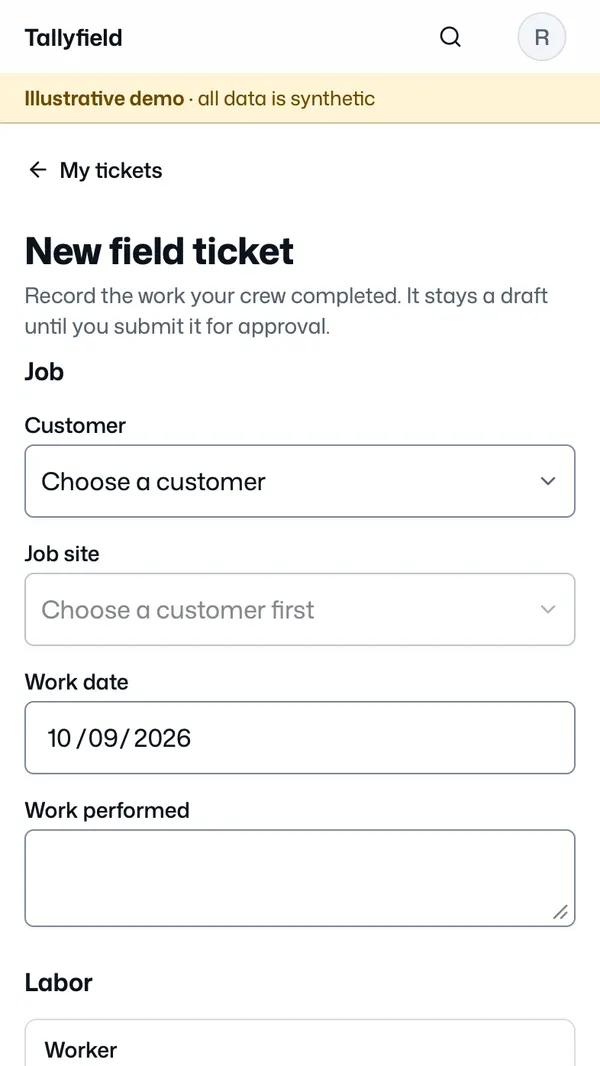
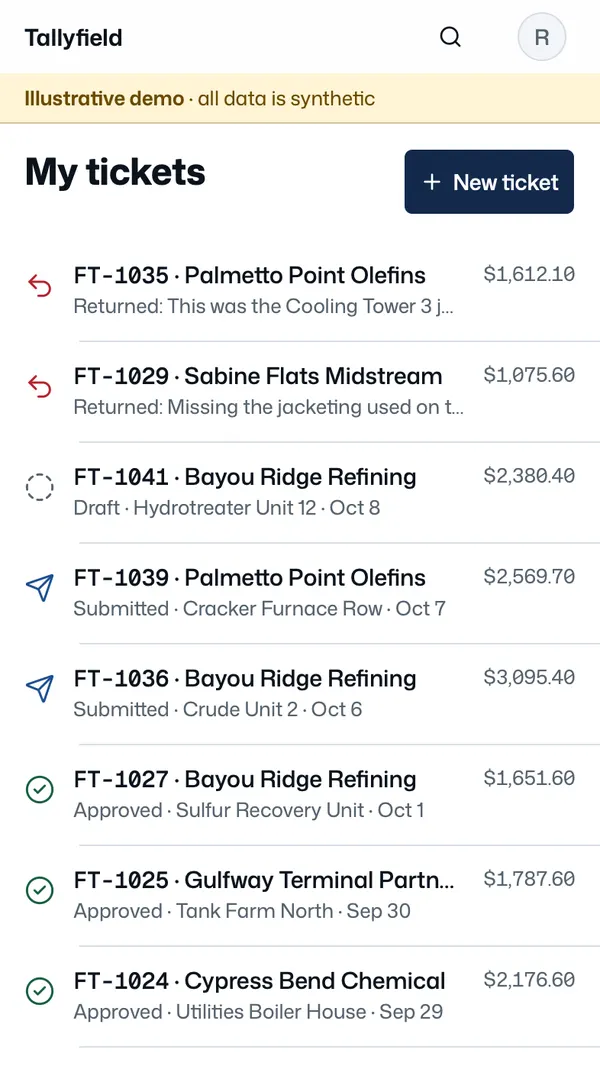
The job is logged once, on a phone
Customer, site, hours and materials go in at the job. Nobody types them again back at the office.
We build software for field service businesses that takes the re-typing and chasing off your office and crews, and works with the tools you already use. Fixed price, agreed in writing.
A video call with me, Jeff Taylor. We go through how a normal day runs, and I tell you whether an audit would pay for itself.
Two minutes, free, and nothing you enter leaves this page.
Choosing an answer moves on to the next question.
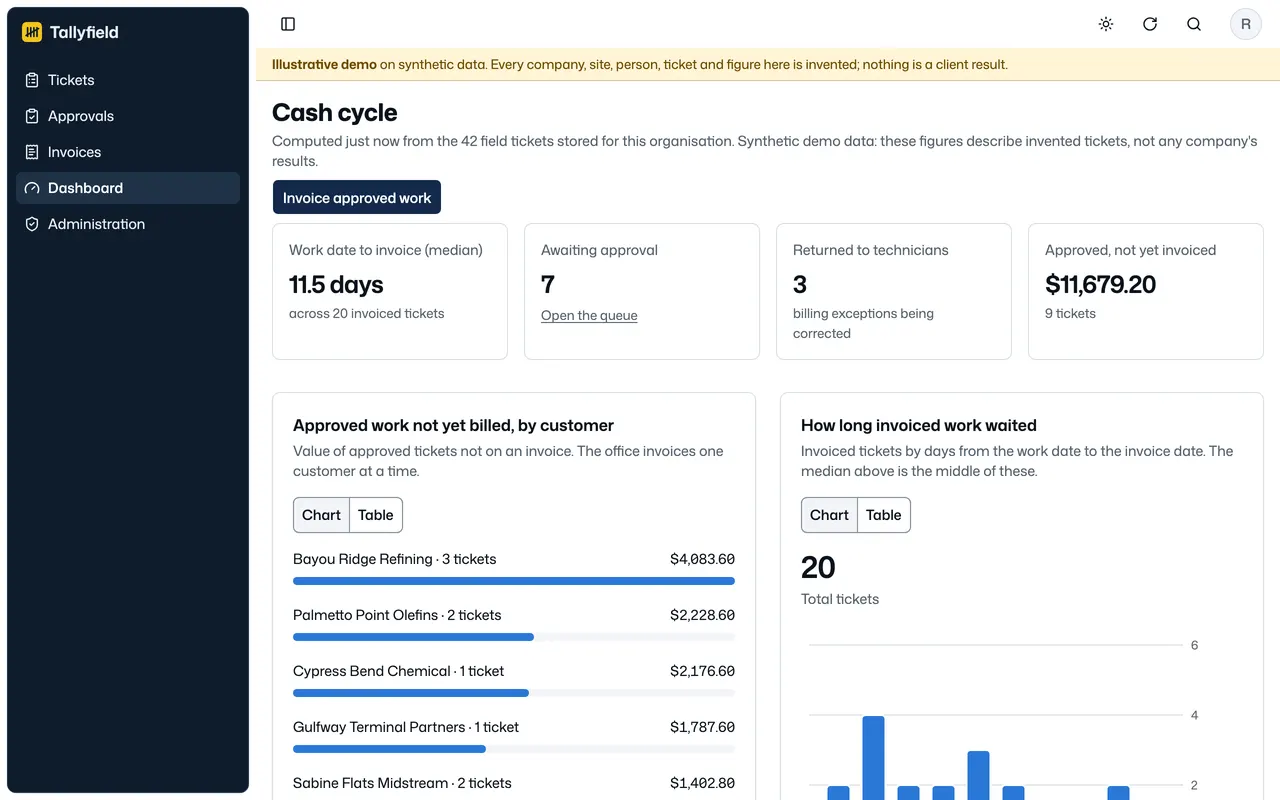
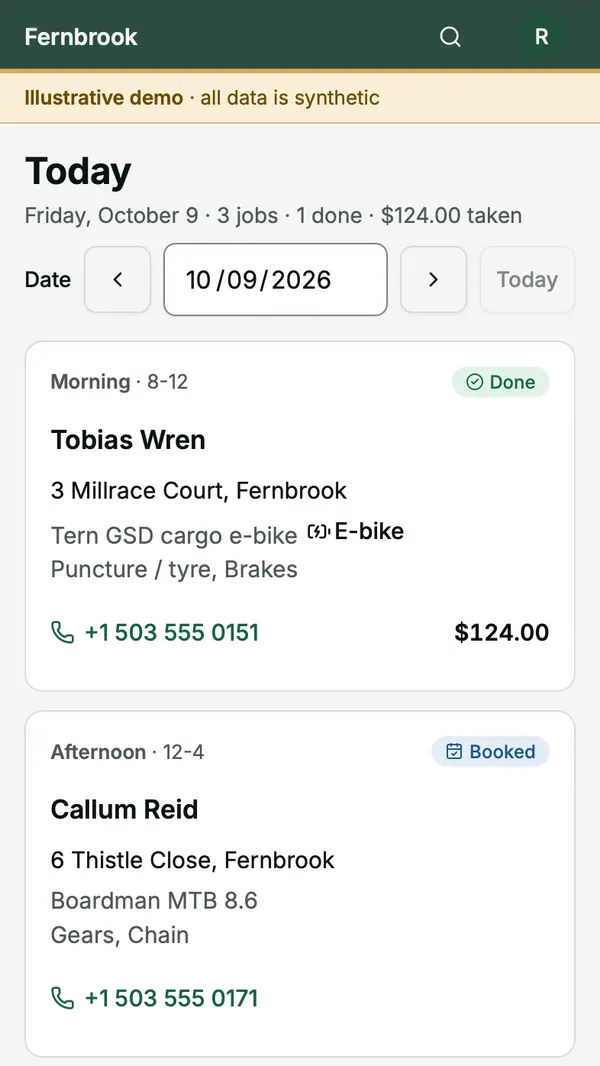
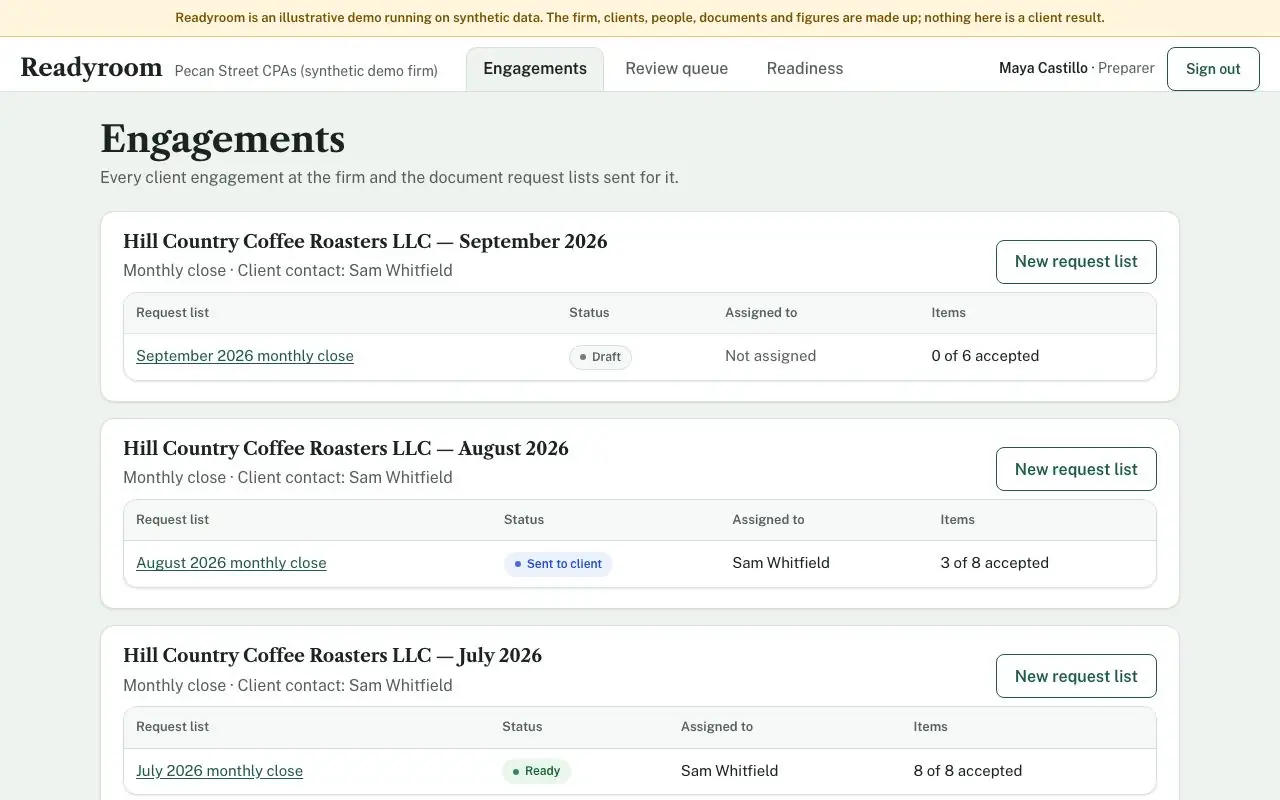
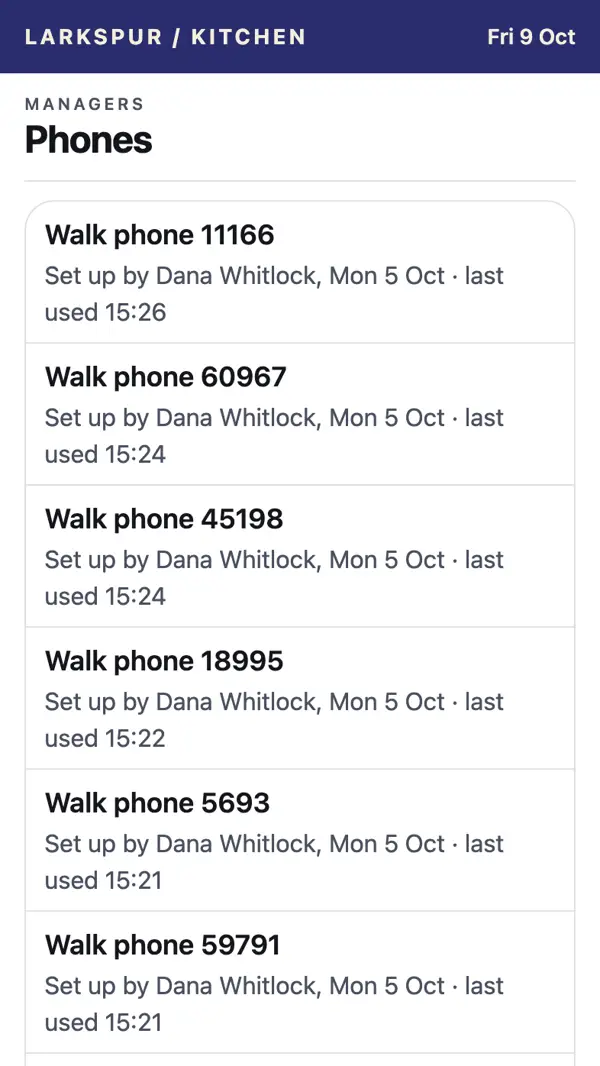
Real screens from Tallyfield, a field-service demo we built, on invented data. Yours is fitted to your work.
For your crews
Customer, site, hours and materials go in at the job. Nobody types them again back at the office.
For the office
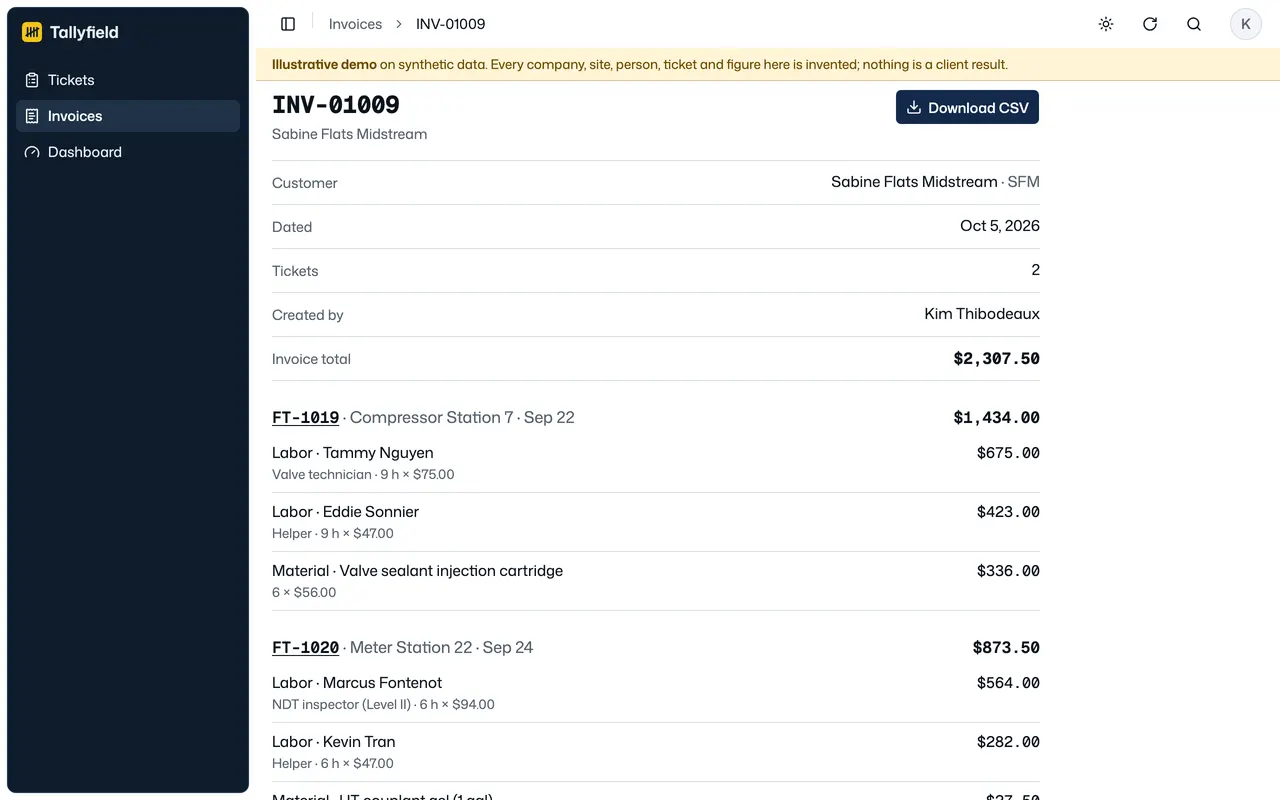
Once a supervisor approves the tickets, the invoice is ready line by line, and it exports straight to your accounting.
For the owner
Work done but not billed, how long invoices take, what is waiting on approval: one screen, updated as the work moves.
| Option | How it fits your work | Who fixes it | Who owns it | What it costs |
|---|---|---|---|---|
| An off-the-shelf app | How it fits your workYour team changes how it works to fit the app | Who fixes itThe vendor, on their schedule | Who owns itThe vendor | What it costsA monthly fee per user |
| No-code automations between your apps | How it fits your workEach step depends on two other apps staying the same | Who fixes itWhoever set it up, if they are still around | Who owns itSpread across the apps you subscribe to | What it costsPer task, plus the time to keep it running |
| Software built around your business | How it fits your workBuilt to how your crews and office already work | Who fixes itUs, under care, or your own team | Who owns itYou: the code and the data | What it costs$3,000 audit, then a fixed price, typically $20,000 to $30,000 |
Fixed prices, written down before anything starts.
1. Free call
Free, 30 minutes
We go through how a normal day runs. I tell you plainly whether an audit would pay for itself.
2. Deep audit
$3,000, fixed
We sit with your team, map where work is typed twice, and write down what to build first and its fixed price. Go ahead with the build within 60 days and the $3,000 comes off the build price. You keep the plan either way.
3. Build
$20,000 to $30,000, fixed
Built one piece at a time on a live preview you can use on your phone. Nothing moves on until you approve it.
4. After launch
30 days of support included
Then care, priced to what you run: nightly tests, data checks and fixes. Or a strategic partnership, where I work as your fractional CTO and we scope it together.
Scope is frozen in writing at the end of the audit. Anything outside it is quoted as a written change request before work starts, and if the agreed scope takes longer than planned, that's our cost. You can stop after the audit and keep the plan.
Each is a complete build, taken from brief to release through the same process every project goes through.
These were built for practice clients we created to test our process. The businesses, people and data are synthetic.
From my own work: RNG RFP, a marketplace I built for requests for proposals in renewable natural gas and renewable energy projects.
We build software for field service businesses. A job is entered once, on site, and from there it reaches scheduling, invoicing and the owner's dashboard without anyone typing it again.
The deep audit is $3,000, and it comes off the build price if you go ahead within 60 days. A typical build is $20,000 to $30,000 at a fixed price. Every build includes 30 days of support. Care and strategic partnership after launch are priced to what you need.
Yes. It is 30 minutes, and its job is to decide whether an audit is worth it for you. If it isn't, I'll say so on the call.
No. Where your current tools do the job, we build around them and remove the manual steps between them.
If an off-the-shelf app already fits how your business works, buy the app. I'll tell you on the call if that's the case.
You do. The code is yours, and so is your data.
When we hold your data, we do it under a written agreement, and at the end of the engagement we return it or delete it, whichever you choose.

I've been building software for 15 years, most of it for energy and finance companies where a wrong number costs real money. I started Auxelion in 2018 to bring the same rigor to businesses that run on job sheets and spreadsheets.
When you book a call, you talk to me. I'll ask how a normal day goes: where things get typed twice, chased or fixed by hand. If an audit wouldn't pay for itself, I'll tell you on the call.
Jeff Taylor
Founder, Auxelion
Houston, Texas